The teenage and young adult years are already a lot to navigate. Add a disability into the mix and things like finishing school, finding work, or just building a social life can feel a lot further out of reach than they should.
Superior Quality Care's youth mentoring support pairs young NDIS participants in Brisbane with a mentor who focuses on where they're headed, not just what they can't do yet. We work with young people across Brisbane South, Redbank Plains, Ipswich West, and Logan.
What is NDIS youth mentoring?
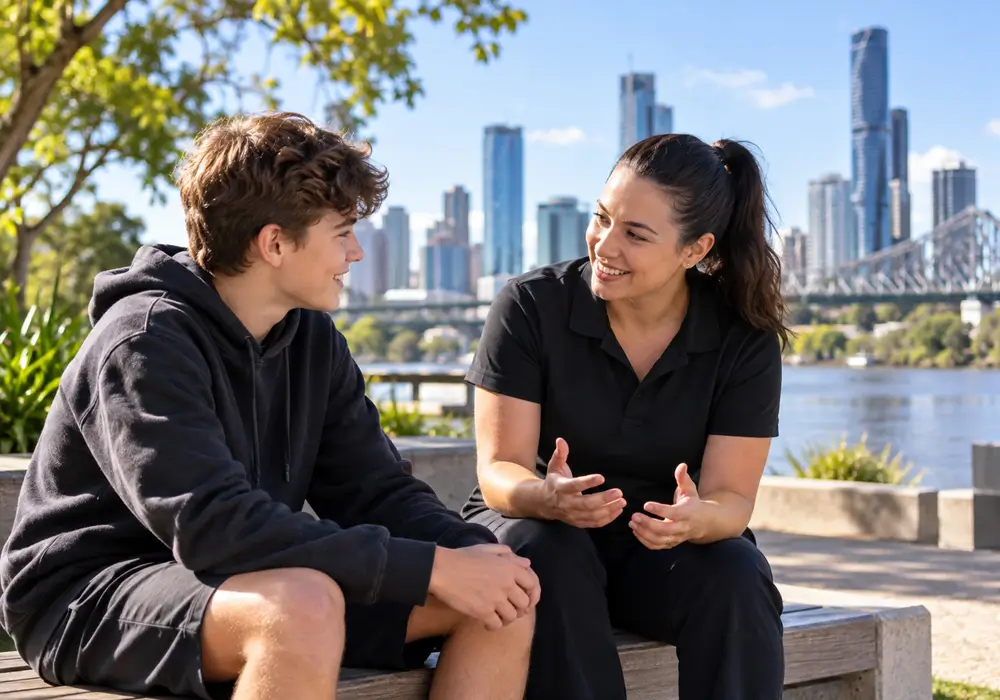
Youth mentoring is capacity-building support that helps young people with disability develop confidence, independence, and life skills through a consistent relationship with one support worker, rather than a rotating cast of staff.
Unlike general support work, mentoring leans into goals like decision-making, self-advocacy, and preparing for adult life, alongside the practical stuff.
What a mentoring relationship looks like
Why the mentor relationship matters
A lot of youth support falls apart because the worker changes every few weeks. Mentoring only works if there's continuity, so young people can actually build trust and open up about what they want, rather than re-explaining their situation to someone new each time.
We match mentors based on personality and interests as much as scheduling, because a mentor a young person actually wants to spend time with gets far better results than one who simply ticks the funding boxes.
Supporting the transition to adulthood
Youth mentoring often overlaps with life stage transitions, moving from school to further study or work, from family home toward more independence, or from a paediatric to an adult service system. Our mentors work alongside families and schools where it's useful, without taking over decisions that belong to the young person.
Why choose Superior Quality Care
Funding youth mentoring
Youth mentoring is generally funded under Capacity Building, Increased Social and Community Participation, or through Core Supports depending on how it's structured in the plan. We'll check what your plan allows before recommending a schedule.
How we choose and train mentors
Mentors are selected as much for personality fit and communication style as for formal qualifications. We look for people who are genuinely comfortable spending unhurried time with young people, not just filling rostered hours.
Every mentor completes NDIS Worker Screening and youth-specific training before being matched with a young person, and we check in regularly with both the young person and their family to make sure the relationship is actually working the way it's meant to.
Signs mentoring might help
Not every young person needs a formal mentor, but there are some common signs it's worth considering: reluctance to try new activities, difficulty making or keeping friendships, anxiety about an upcoming transition like leaving school, or simply wanting an adult in their corner who isn't a parent or teacher.
Mentoring tends to work best when the young person has at least some say in the decision, rather than it being something entirely arranged around them. We involve the young person in the matching conversation wherever their communication style allows it.
Progress with mentoring is usually gradual rather than dramatic. Families should expect small, steady shifts, more willingness to try things, a bit more confidence in conversation, rather than an overnight change.
Problems Faced by Young NDIS Participants in Brisbane
Youth mentoring often falls apart because the mentor changes every few weeks, which means a young person never gets far enough into the relationship to actually open up or build trust. Generic youth programs can also miss the mark for participants who need a more individually paced approach to things like social confidence or transitioning out of school.
How We Solve This & How Active We Are in Brisbane
We prioritise keeping the same mentor assigned to a young person for as long as the arrangement runs, rather than rotating staff through. Our Brisbane team, covering Brisbane South, Redbank Plains, Ipswich West, and Logan, matches mentors on personality and interests as much as scheduling, and we check in regularly with both the young person and their family to make sure the relationship is genuinely working.
Getting started
If you're a parent, carer, or a young person ready to start, get in touch and we'll talk through what mentoring could look like and match you with someone who fits.
Contact Us