Your first NDIS plan sets the tone for everything that follows. Get it right and you have a solid base to work from. Get it wrong and you spend the next 12 months working around inadequate funding, hoping the next review fixes things. The good news is that ‘getting it right’ is mostly about preparation, not luck.
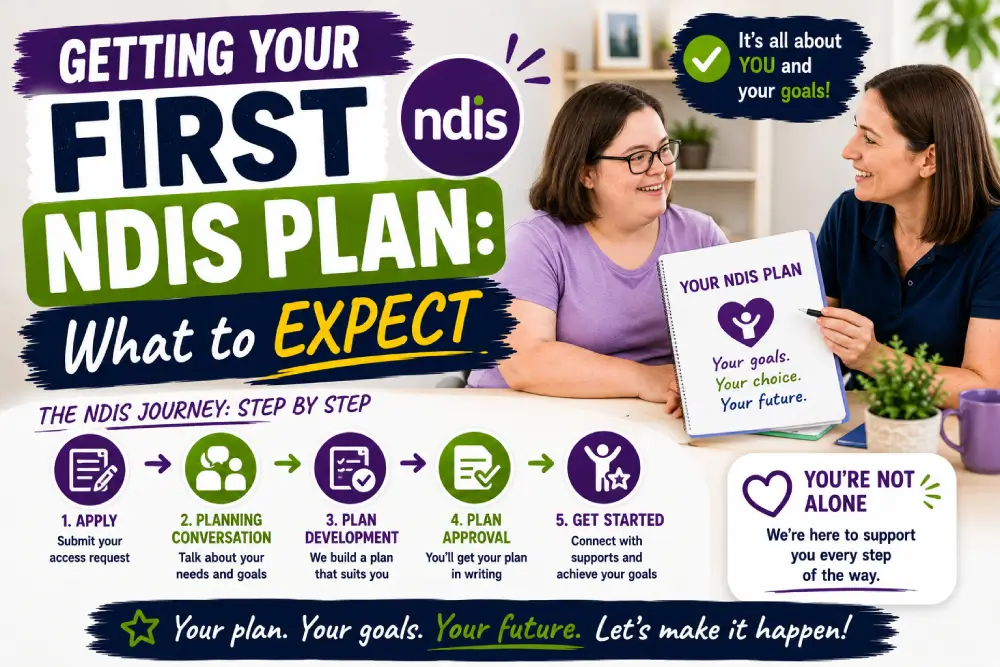
Step 1: The Access Request
Before you can have a plan, you need to be confirmed as eligible. This is the Access Request — a process where the NDIA decides whether you meet the access criteria.
To be eligible, a person must:
- Be aged under 65 when first applying
- Be an Australian citizen, permanent resident, or hold a Protected Special Category Visa
- Have a permanent and significant disability that affects everyday activities
To make the Access Request, call the NDIA on 1800 800 110. They send an Access Request Form. You provide evidence — usually reports from your GP, specialist, or allied health team. The NDIA reviews the evidence and decides.
Step 2: After Approval
Once you are approved as a participant, the NDIA contacts you to set up a planning conversation. This is where the actual plan gets shaped. The conversation may be in person, by video call, or by phone, depending on availability and preference.
In some regions, the planning conversation is run by an NDIA planner. In others, it is run by a Local Area Coordinator (LAC) — a contracted partner like Carers QLD or EACH. Both work to the same NDIS rules.
Preparing For The Planning Conversation
This is the most important meeting of the whole process. Preparation is what separates a plan that works from one that does not.
Things to bring:
- Recent reports from your treating professionals (GP, specialist, allied health)
- A clear description of your typical week — what you do, what you struggle with, what you cannot do
- A list of supports you currently use (formal and informal)
- Specific goals for the plan period
- A list of supports you think you need going forward
Bring someone with you. A family member, advocate, or professional. Two people in the room catch more than one.
How Goals Work
The NDIS funds supports that work toward goals. So your goals shape what gets funded. Strong goals are specific — ‘increase community participation from one outing per fortnight to two per week’ is workable. ‘Get more out of life’ is too vague to fund effectively.
Examples of useful first-plan goals:
- Establish a consistent weekly personal care routine that supports independent living
- Begin building cooking skills with the goal of preparing three meals per week independently
- Maintain regular community participation including gym attendance and a weekly social group
- Begin transition to part-time employment within 12 months
What To Ask For
Don’t wait for the planner to suggest what you need. Come with a list. Common requests for first plans:
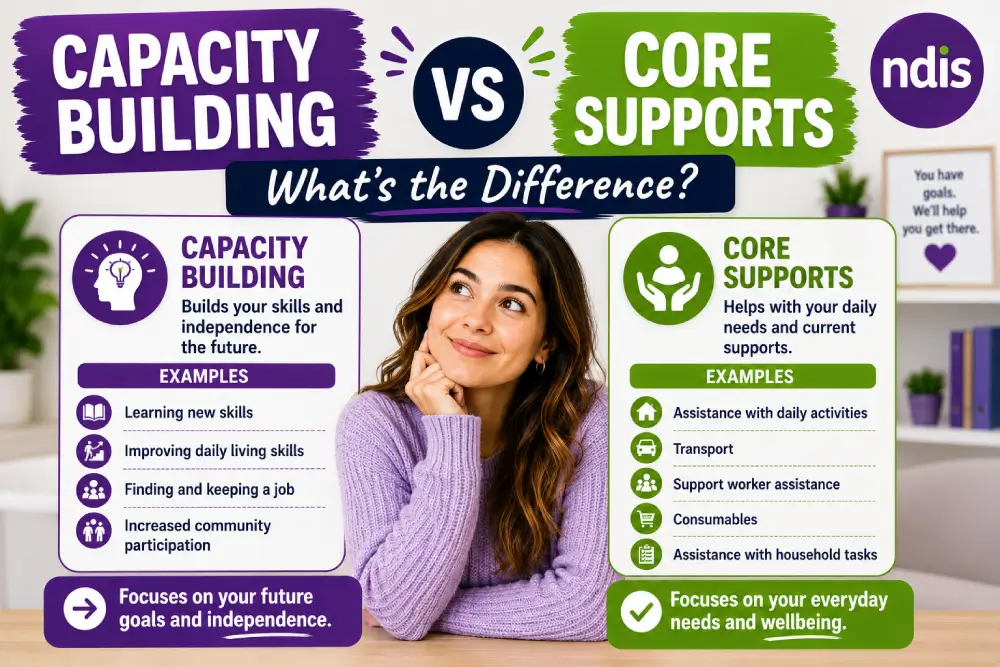
- Core Supports — daily personal activities, household tasks, community participation, transport
- Capacity Building — support coordination (especially if your situation is complex), Improved Daily Living, allied health
- Capital Supports — assistive technology if you have a confirmed need (wheelchairs, communication devices)
If you are not sure how much funding to ask for, look at what your current informal supports cover. The NDIS will not duplicate informal support, but where informal support is reaching its limit, the case for funded support is stronger.
After The Plan Comes Through
Plans usually take 4 to 8 weeks to be approved after the planning conversation. Sometimes longer. When it arrives, read it carefully:
- Are the goals worded the way you discussed?
- Are the funding categories what you expected?
- Are the dollar amounts adequate for what was discussed?
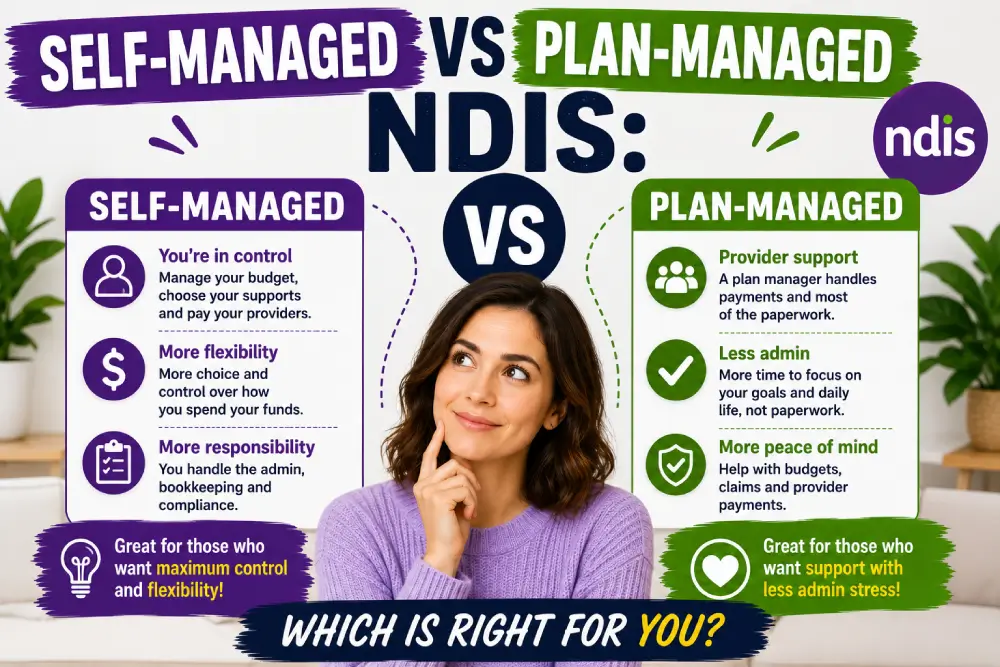
- Is the management type (NDIA-managed, plan-managed, self-managed) what you asked for?
Errors are not uncommon. If something looks wrong, request a correction or internal review within 90 days.
First-Plan Mistakes To Avoid
- Underselling your needs. Many first-plan participants describe a ‘good day’ rather than a typical day. Plans funded for the good days fall short for the harder ones.
- Not asking for support coordination. First-plan participants often skip support coordination because they do not realise how complex the rest of the year will be. A coordinator in your first plan saves a lot of trial and error.
- Vague goals. Goals that say ‘I want to be more independent’ do not lead to fundable supports. Concrete goals do.
- Going alone. If you have not been through this before, having someone with you matters. The technical language alone is reason enough.
FAQs
Q1. How long does it take to get a first plan?
From Access Request to plan approval, typically 2 to 4 months. Some take longer. The NDIA aims for 56 days from access approval to plan in place.
Q2. Can I start using providers before my plan is approved?
Generally no for NDIS-funded supports. You can have providers ready and conversations underway, but services are funded once the plan is in place.
Q3. What if my first plan is inadequate?
Request an internal review within 90 days, or appeal to the AAT if internal review does not resolve it. You can also request a plan variation if circumstances have changed since planning.
Q4. Can I change my management type after the first plan?
Yes. Request a change at any point. Most participants who want to change go from NDIA-managed to plan-managed for the extra flexibility.
Q5. Should I have a support coordinator in my first plan?
Often yes — especially if your situation is complex, you have multiple providers, or you are new to navigating the NDIS. Request it specifically at planning.