Morning routines are where most personal care funding gets used. The right routine — properly thought through — sets up the rest of the day. The wrong routine creates rushed shifts, missed steps, and frustration on both sides. Here is what we have learned about getting it right.
Start With What You Need, Not What’s Standard
There is no standard morning routine. Some participants need 90 minutes from start to finish; others need three hours. Some are out of bed by 6 am; others not until 9. Begin by mapping what you actually do, in detail, before you talk to a provider about hours.
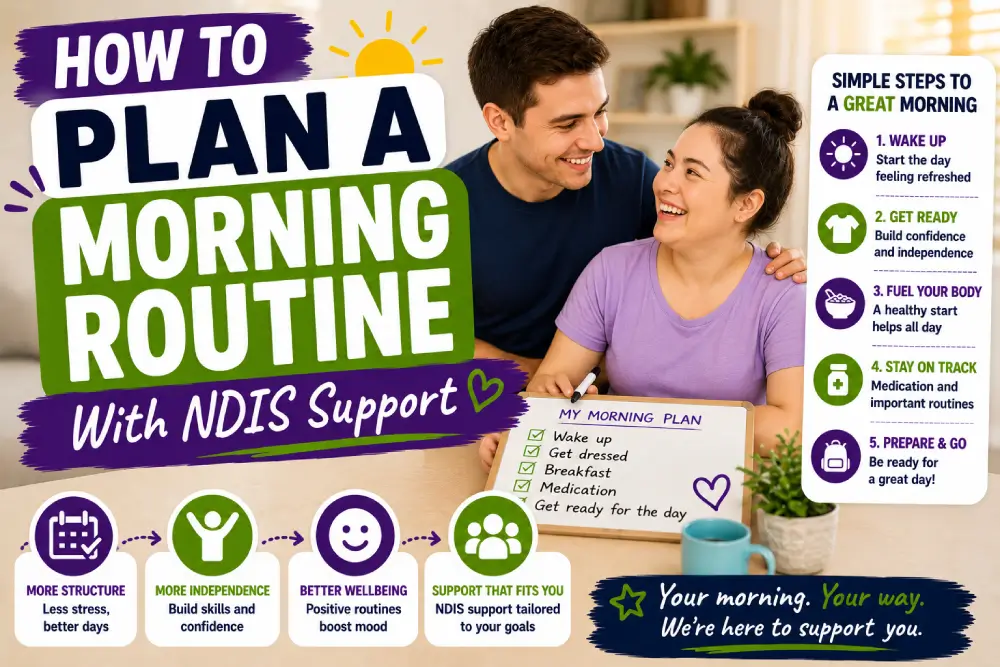
List every step, in the order you do them:
- Waking and getting out of bed
- Bathroom — toileting, washing, brushing teeth
- Showering or bathing
- Drying, applying creams or skin care
- Dressing
- Hair, shaving, makeup
- Medication
- Breakfast
- Anything else specific to your morning — physiotherapy exercises, equipment set-up, communication device check, etc.
Time each step honestly. Add buffer for the days when things take longer.
Common Patterns We See
- The 90-minute morning. Worker arrives, participant is woken, full personal care, dressed, breakfast on the table within 90 minutes. Suits participants with relatively independent breakfast and dressing but who need full help with showering and personal care.
- The two-hour morning. Worker arrives, longer transition out of bed, fuller assistance throughout, slower pace. Common for participants with high physical care needs, complex transfers, or who use the morning routine as part of their pacing for the day.
- The split shift. Worker comes for 30 minutes early (medication, breakfast, getting up), leaves, returns for an hour mid-morning for full personal care. Suits participants whose day starts early but who shower later.
- The double shift. Two workers for the same period, used where transfers require two people or where the participant has high needs that one worker cannot manage safely.
Timings Matter
Worker arrival times have real consequences. A 6 am start gives the participant time for an unrushed routine. A 9 am start may not work if the participant has medical appointments or other commitments. Be clear with your provider about arrival times — and hold them to it.
Be realistic about what fits. A participant who needs a 90-minute routine but books 60 minutes of support is going to feel rushed every morning. The fix is more time, not faster work.
Building In Independence
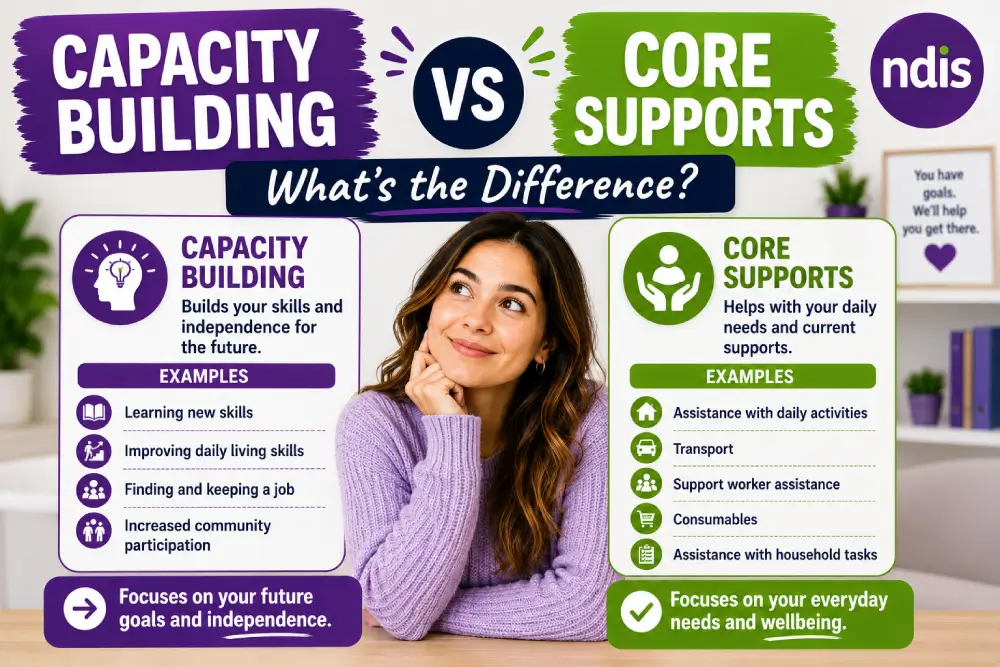
Routines should evolve. A participant who needs full assistance today may, with the right approach, need less support in twelve months. Improved Daily Living funding (Capacity Building) can run alongside personal care to build skills the participant wants to develop.
Examples of typical capacity-building work in mornings:
- Independent breakfast preparation (started with full support, gradually reduced)
- Independent dressing of upper body, with support only for lower body
- Self-managing medication with prompts only
- Independent grooming (teeth, hair) with set-up support only
When The Routine Stops Working
Routines that worked six months ago may not work now. Common reasons:
- Health changes — new diagnoses, worsening conditions, recovery from surgery
- Equipment changes — new wheelchair, new transfer equipment, new communication device
- Worker changes — new worker who works at a different pace
- Schedule changes — new study or work commitments shifting morning timing
Talk to your provider when something stops working. Most rosters can be adjusted within a week or two.
FAQs
Q1. How early can a support worker start?
Most providers schedule shifts as early as 6 am. Earlier is sometimes possible depending on worker availability and your suburb.
Q2. Can I have the same worker every morning?
That is the goal. Reliable providers schedule a primary worker for each participant and keep one or two briefed back-up workers for when the primary is on leave.
Q3. What if I cannot afford the time I actually need?
Talk to your provider and your support coordinator. Sometimes the routine can be streamlined; sometimes the funding needs to be increased at plan review. Rushing the routine to save funding usually backfires.
Q4. Can my worker make breakfast?
Yes. Breakfast preparation can be funded as part of personal care (where eating assistance is involved) or as part of household tasks (where it is straightforward meal prep).
Q5. What about morning medication that requires direct administration?
Workers trained for High Intensity Daily Personal Activities can administer medication that requires more than supervision. Most morning medication is taken under supervision rather than directly administered.