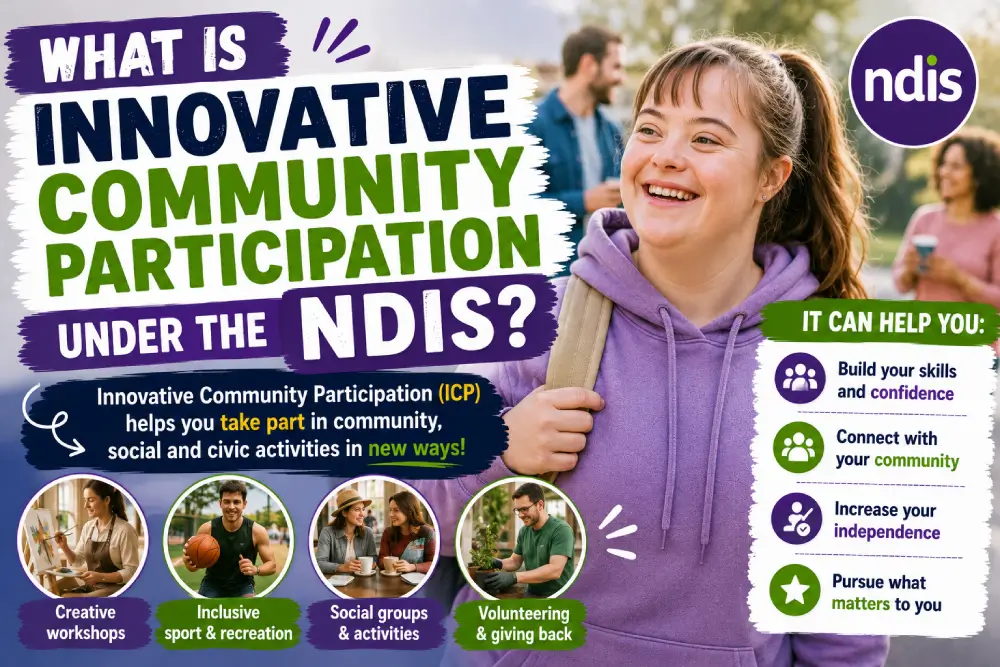
Innovative Community Participation — usually shortened to ICP — is one of the lesser-known NDIS funding categories. It can be genuinely useful for the right participant and confusing for everyone else. This is what it actually is and when it matters.
The Basic Difference
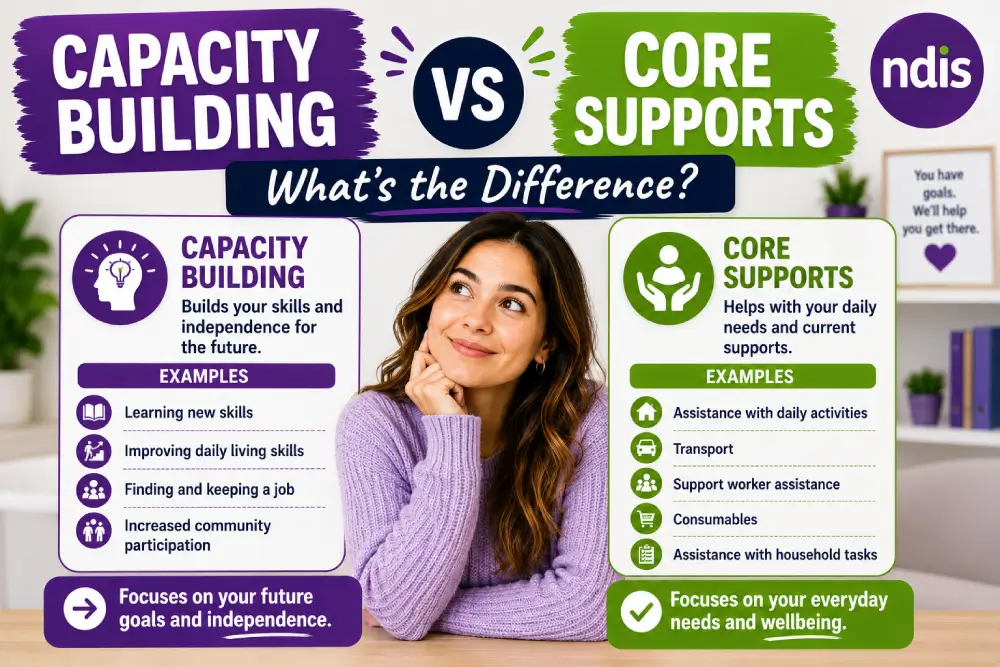
Standard community participation funds support to attend an existing activity. ICP funds a structured program designed to build a specific skill or capacity over time. ICP usually has a clearer beginning, middle, and end — a defined goal, a curriculum, and a way to measure progress.
Community participation: ‘A worker takes me to my Wednesday choir.’ ICP: ‘I am doing a 12-week structured program to build communication skills, ending in a public performance.’
Where The Funding Sits
ICP is funded under Capacity Building Supports as ‘Increased Social and Community Participation’. That category is separate from Core Supports, so participants need it specifically allocated in their plan. Many plans do not include it, which limits what providers can offer.
What ICP Programs Look Like
Programs vary, but common formats include:
- Skill-building groups — small groups of three to five participants working on a specific area: communication, money management, social skills, public transport. Programs typically run 8 to 20 weeks with weekly sessions.
- Pre-employment programs — structured groups preparing participants for part-time work or volunteering. Workplace communication, interview practice, soft skills.
- Volunteering pathways — structured matching of participants to volunteer roles, with intensive support during the first weeks and gradual reduction.
- Travel and independence training — structured programs to learn public transport, navigate shopping centres, manage money in real-world settings.
- Hobby-based capacity building — art, music, gardening, or sport programs designed to build social skills through shared activity rather than just provide leisure.
Who ICP Works Well For
- Young adults transitioning out of school looking to build social or work-readiness skills
- Participants whose plan reviews flagged ‘social isolation’ or ‘limited community connection’ as goals
- People stepping down from higher-intensity support and ready to develop independence
- Participants with mental health or psychosocial diagnoses who do better with structured peer-based programs
- Adults seeking specific outcomes — joining a community group, securing a volunteering role, attending an activity independently
Who ICP Works Less Well For
- Participants whose support needs are primarily personal care or daily life — Core Supports is the right place
- Participants who already have a strong community connection and just want company on outings — standard community participation suits better
- Participants whose disability makes structured group settings significantly distressing — one-on-one Capacity Building work may be more appropriate
Group vs One-on-One
ICP can be delivered in groups or one-on-one. Group programs are more cost-effective per participant and offer peer interaction. One-on-one programs allow customisation but cost more per hour. The right format depends on the participant — group works well for some, one-on-one for others.
Asking For ICP At Plan Review
ICP funding is more likely to be approved when the request is tied to clear goals. ‘I want general community participation’ is too vague. ‘I want a structured 12-week program building toward joining a regular community group’ is more concrete.
If your plan does not currently fund ICP and you think it should, talk to your support coordinator (or LAC) about how to frame the request at plan review. Evidence of a specific goal and a structured program plan strengthens the case.
FAQs
Q1. How much does ICP cost?
ICP is funded at Capacity Building rates, which are set by the NDIS Pricing Arrangements. Group programs cost less per participant than one-on-one.
Q2. Can ICP and standard community participation run together?
Yes. Many participants have both — Core funding for Saturday social outings and ICP funding for a weekday skill-building program.
Q3. How long do ICP programs last?
Most run for 8 to 20 weeks with a clear review at the end. Some participants run multiple programs back-to-back over the life of their plan.
Q4. Is ICP the same as innovative supports?
Different concept. ‘Innovative supports’ is a broader NDIA term sometimes used for unusual support arrangements. ICP is specifically Increased Social and Community Participation under Capacity Building.
Q5. Do I need a coordinator to access ICP?
No, but a support coordinator can help find ICP programs and request the funding at plan review.