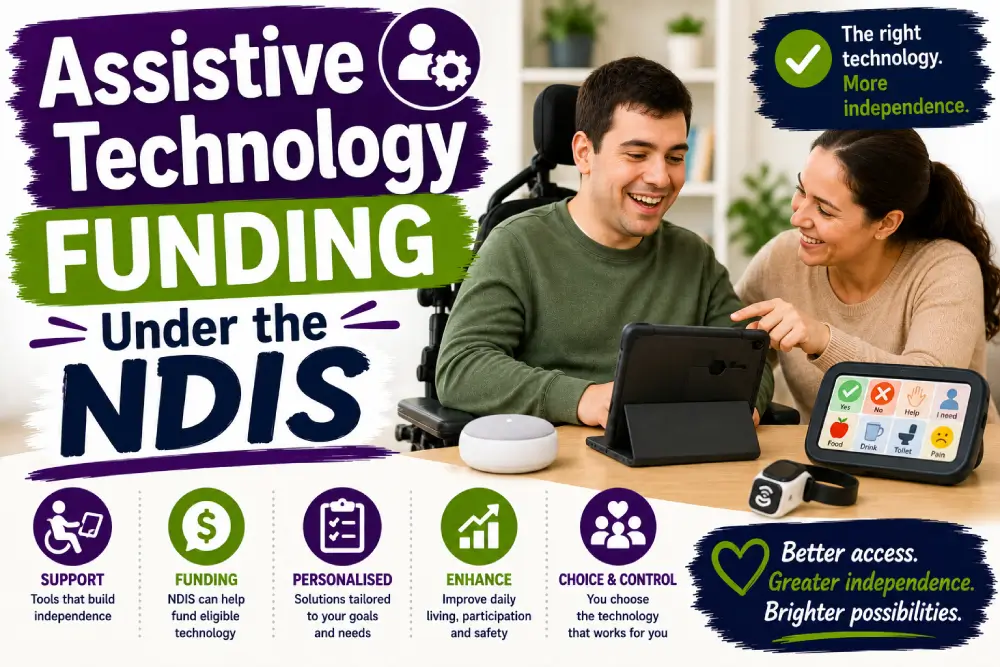
Assistive technology — wheelchairs, communication devices, hearing aids, hoists, prosthetics, and dozens of other items — is one of the most useful parts of NDIS funding when it works. It is also one of the most frustrating when approval drags out, equipment is delayed, or assessments hit dead ends. Understanding how AT funding actually works makes the process less painful.
What Counts As Assistive Technology
Assistive technology (AT) under the NDIS is any device, piece of equipment, or system that helps a participant do something they could not otherwise do, or do it more safely or independently. Common categories include:
- Mobility — wheelchairs (manual and powered), walkers, scooters, hoists
- Communication — speech generating devices, communication boards, eye gaze technology
- Personal care — adaptive feeding equipment, shower chairs, commodes, transfer equipment
- Vision and hearing — hearing aids, magnifiers, screen readers, braille displays
- Computing — accessibility software, alternative keyboards, environmental controls
- Vehicle modifications — hand controls, hoists, ramps, securement systems
- Home equipment — adjustable beds, pressure-relieving mattresses, lifting equipment
The Four AT Levels
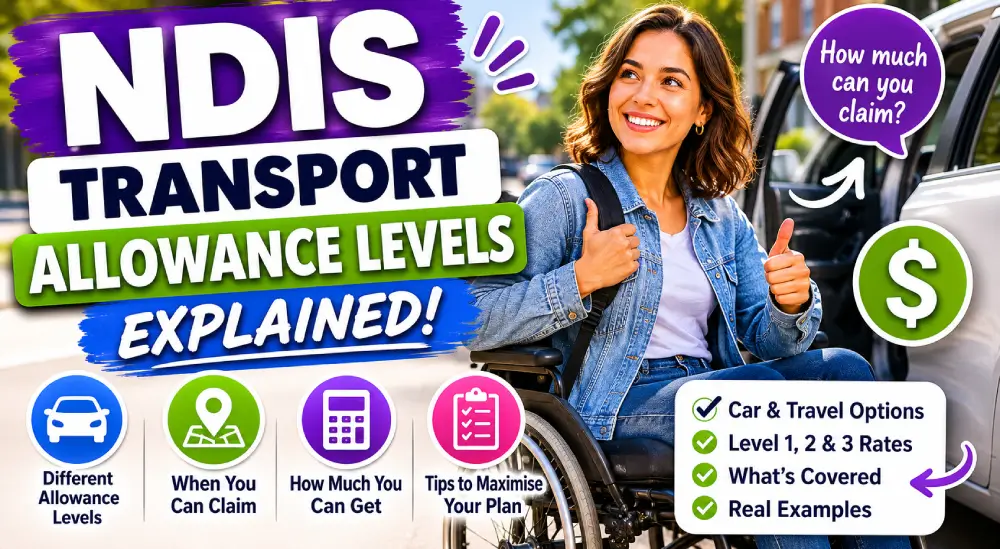
The NDIS classifies AT into four levels based on cost and complexity. Each level has its own assessment and approval process.
- Level 1 — Basic AT (under $1,500). Low-cost items like reachers, grab rails, basic kitchen aids, simple shower stools. Generally minimal evidence required and approval is straightforward.
- Level 2 — Standard AT ($1,500 to $5,000). Items like manual wheelchairs, basic powered mobility, standard communication aids. Requires an assessment by a suitably qualified allied health professional.
- Level 3 — Specialised AT ($5,000 to $15,000). More complex items — custom-fitted manual wheelchairs, mid-range powered chairs, specialised seating, complex communication devices. Requires a detailed prescription and quote.
- Level 4 — Complex AT (over $15,000). High-cost specialised equipment — custom powered wheelchairs, complex environmental control systems, advanced communication systems. Requires comprehensive AT assessment, multiple quotes, and detailed clinical justification.
How AT Gets Funded
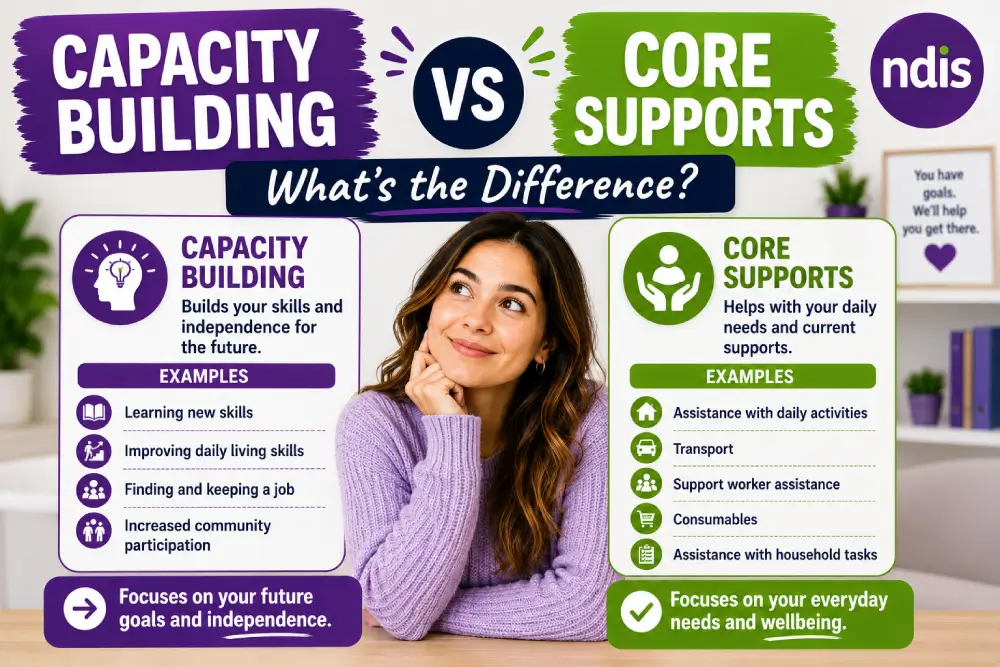
AT is funded under Capital Supports — a separate part of your NDIS plan from Core Supports. Capital Supports funding is generally tied to specific items rather than flexible across categories. If your plan funds a powered wheelchair, you cannot use that funding for an unrelated item.
Two paths into the funding:
- In the original plan. AT needs identified at planning are funded directly. The participant has the funding once the plan is approved and works with allied health to specify and order the equipment.
- Plan variation. AT needs that emerge mid-plan can be requested through a plan variation. The participant submits evidence — clinical reports, AT assessment, quotes — and the NDIA decides whether to add funding.
The Allied Health Role
For AT above Level 1, an allied health professional with relevant expertise is almost always involved. Common roles:
- Occupational Therapist — most general AT, mobility, daily living equipment, home modifications
- Physiotherapist — mobility AT, particularly seating and complex wheelchairs
- Speech Pathologist — communication devices, augmentative and alternative communication systems
- Audiologist — hearing aids and hearing-related AT
- Optometrist or low vision specialist — vision-related AT
The allied health professional assesses the participant’s needs, recommends specific equipment, and writes the report that supports the funding request. Choosing an experienced AT prescriber matters — they know what gets approved and how to write reports that succeed.
Common Reasons AT Approval Stalls
- Insufficient evidence. Reports that say ‘participant needs a wheelchair’ without specifying functional impacts, alternatives considered, and the case for the specific item recommended often get knocked back.
- No ‘reasonable and necessary’ justification. The NDIA tests whether AT relates to the disability, represents value for money, and meets needs that mainstream options cannot. Reports that skip this analysis get questioned.
- Funding gap between plan amount and actual cost. Plans funded with rough estimates can fall short of actual quotes. Always get current quotes before plan review and check that funding amounts match real-world prices.
- Multiple quotes not provided. For higher-level AT, the NDIA generally wants two quotes to show value for money. One quote slows things down.
- Trial period not completed. For complex powered mobility and communication devices, trial periods with the equipment before purchase are often required. Skipping the trial is grounds for refusal.
Repairs, Replacements, and Maintenance
AT lasts only as long as it works. The NDIS funds:
- Repairs and servicing of approved equipment
- Battery replacement for powered devices
- Replacement when equipment reaches end of life — usually 5 to 7 years for powered mobility, varies by item
- Upgrades when the participant’s needs change and existing equipment no longer fits
Maintenance funding is sometimes built into the original AT funding; sometimes it is requested separately. Plan reviews are a good time to forecast upcoming repair and replacement needs.
Common Mistakes
- Buying first, asking later. Equipment purchased before NDIS approval is generally not reimbursed. Get the funding decision before any purchase.
- Going with the cheapest option without trial. Cheap AT that does not fit costs more in the long run. The right equipment, properly assessed, lasts longer and works better.
- Not planning ahead. Powered wheelchairs can take 3 to 6 months from approval to delivery. Plan replacements before the existing equipment fails, not after.
- Forgetting consumables. Some AT requires ongoing consumables — catheters, communication device accessories, wheelchair tyres. These are funded under different categories and need to be requested separately.
FAQs
Q1. How long does AT approval take?
Level 1 is usually fast. Levels 2 and 3 take weeks. Level 4 (complex AT) often takes months from initial request to equipment in hand.
Q2. Can I choose any provider for my AT?
Yes. AT can be purchased from any registered or non-registered AT provider, depending on your plan management type. Your allied health professional can recommend providers experienced with the specific equipment.
Q3. What if my AT breaks?
Repairs and servicing are funded under your existing AT funding (or a maintenance line if one is included). Contact the supplier first; many have service agreements built in.
Q4. Can the NDIS pay for AT trials before I commit?
Yes — and for complex AT, trials are generally required. The trial period helps confirm the equipment fits the participant’s needs before the full purchase is approved.
Q5. What about AT for children whose needs change as they grow?
Children’s AT often needs replacement or upgrading as they grow. The NDIS funds developmental changes — equipment that fits at age 6 can be replaced when it no longer fits at 9, for example. Plan reviews track this.