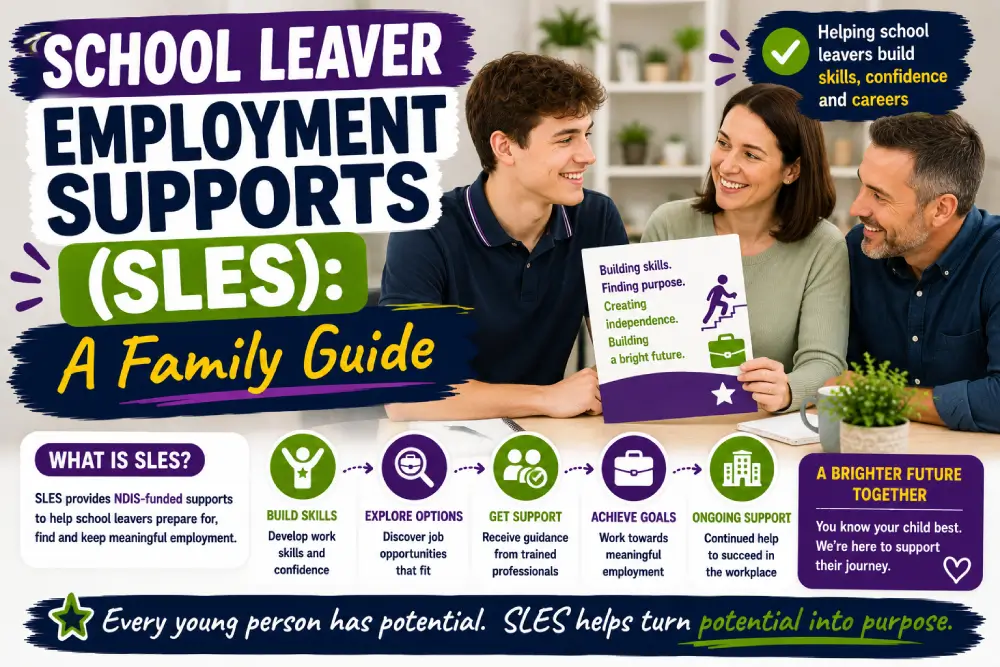
The transition from school to whatever comes next is one of the biggest moments in a young person’s life. For young people with disability, that transition is harder — and the NDIS funds a specific category of support to help. School Leaver Employment Supports (SLES) is one of the most underused parts of the NDIS, and one of the most useful when it is used well.
What SLES Is
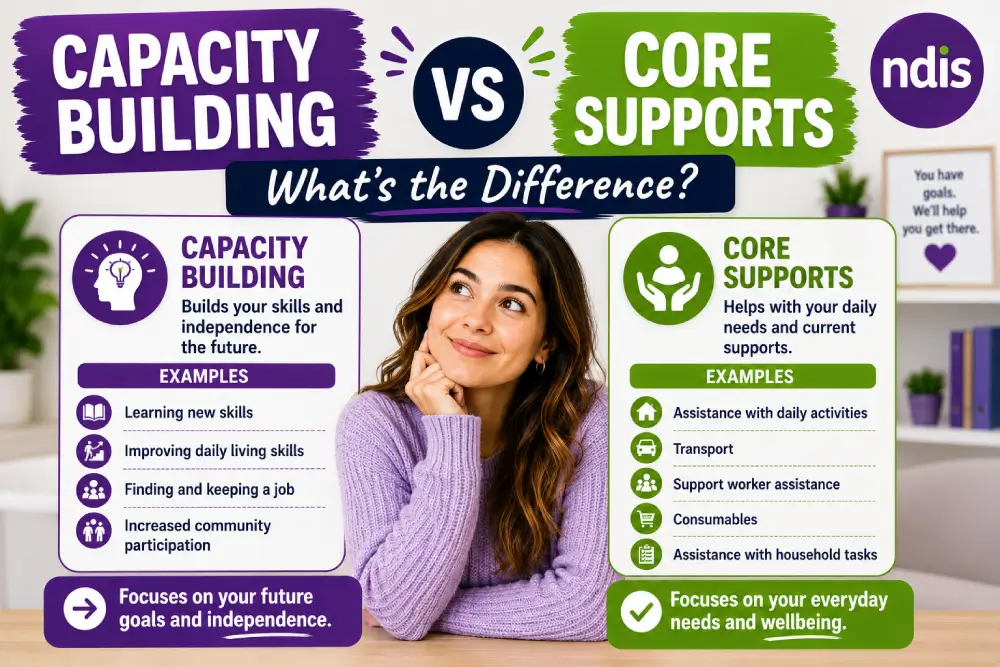
SLES is a Capacity Building support category specifically for young people in their last year of school or recently school-leavers. It funds structured programs that build the skills needed to move toward employment, volunteering, or further education.
SLES is funded under the ‘Finding and Keeping a Job’ Capacity Building category. It runs separately from regular community participation and is designed for the specific transition period — typically the two years after leaving school.
Who SLES Is For
Eligibility is broad — any NDIS participant who is leaving school or has recently left can be funded for SLES if there is a genuine pathway to employment or vocational engagement.
SLES works particularly well for:
- Young people with intellectual disability building toward part-time work
- Participants with autism preparing for vocational training or open employment
- Young people leaving special schools needing structured weekday engagement
- Participants with physical disability transitioning into open employment with workplace adjustments
- School-leavers who are not yet ready for Disability Employment Services but need preparation
What SLES Programs Look Like
Programs vary by provider, but typical components include:
- Workplace skills training — communication, time management, working with colleagues, accepting feedback, dealing with mistakes.
- Job readiness — interview preparation, resume building, understanding workplace rules, dressing for work.
- Real-world placements — supported volunteering, work experience, work trials at local employers.
- Travel training — learning to get to and from a workplace independently using public transport.
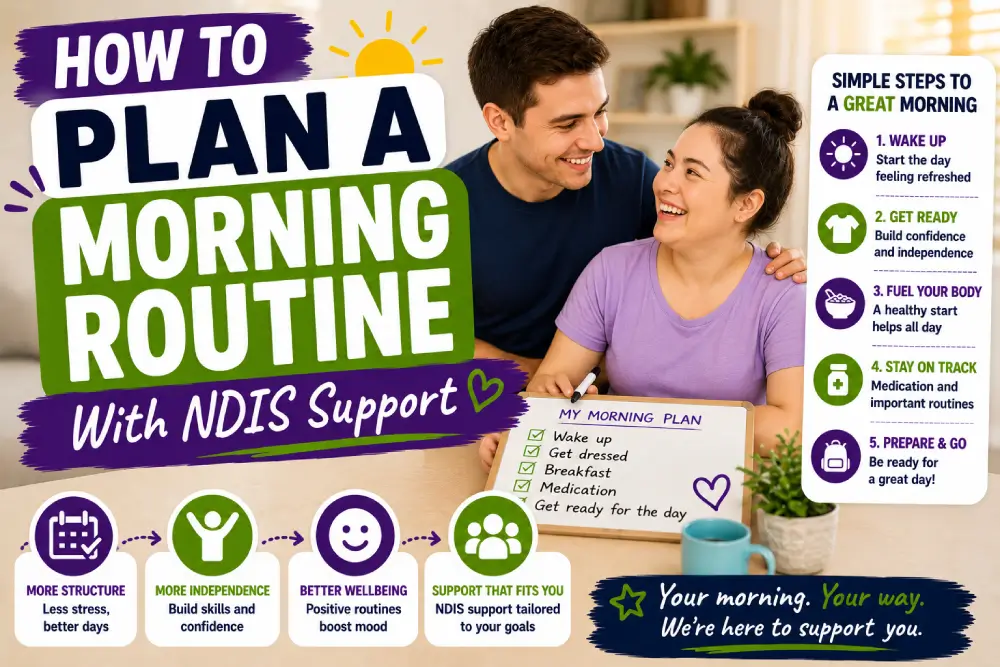
- Daily living support — the routines that make work possible — packed lunches, work clothes, getting up on time.
Most SLES programs run for 12 to 24 months. They usually combine group sessions with individualised work.
How SLES Connects To Other Supports
SLES is one piece of the employment puzzle. The whole picture often includes:
- SLES — pre-employment skill building (Capacity Building)
- Disability Employment Services (DES) — funded separately by the federal government, helps participants find and keep jobs
- Australian Disability Enterprises (ADEs) — supported employment for participants who need ongoing job support
- Open employment — participants working in mainstream workplaces with or without workplace adjustments
A typical pathway: Year 12 final year → SLES program → DES referral → supported job placement → ongoing support transitioning to less SLES funding over time.
Getting SLES Into A Plan
SLES is requested at the planning conversation or plan review. Strong cases include:
- Specific employment goals tied to the participant’s interests and capacity
- Identification of skill gaps that SLES can address
- Evidence from the school’s transition planning team about the supports needed
- Allied health input (occupational therapy, speech pathology) on capacity-building priorities
Common Mistakes
- Treating SLES as ‘school replacement’. SLES is not extended schooling. It is structured pre-employment work. Programs that are mostly social or recreational are not SLES — they are community participation.
- Starting too late. SLES works best when planning starts in Year 11 or Year 12, not after leaving school. Transition planning should be embedded in the school’s program.
- Not connecting to DES. SLES is preparation; DES is job placement. Plans that fund SLES without thinking about the next step often hit a dead end.
- Group programs only. Group SLES programs work for some participants but not all. Where one-on-one or small-group is the right fit, the funding can support that — it does not need to be a large group.
FAQs
Q1. How long does SLES funding last?
Most SLES programs run for 12 to 24 months. Funding is allocated annually as part of the plan and can continue across multiple plans where there is ongoing benefit.
Q2. Can SLES include real work?
Yes. Supported volunteering, work experience placements, and work trials are common components. SLES bridges from school to work, not just classroom-style training.
Q3. Is SLES the same as a day program?
No. SLES is structured pre-employment work with employment outcomes. Day programs are typically more general community participation. Some providers run programs that include both, but the funding categories are different.
Q4. Does SLES guarantee a job at the end?
No. SLES builds capacity, but employment outcomes depend on the participant, the labour market, and other factors. The next step is usually DES, which is the actual job placement service.
Q5. Can SLES funding be used for further study instead of employment?
SLES is specifically for employment-related capacity. Study-related supports usually fall under different Capacity Building categories. Talk to your support coordinator if you are not sure where the boundaries sit.