Overnight support is one of the most expensive parts of NDIS funding, and one of the most misunderstood. The two main categories — sleepover and active overnight — sound similar but mean very different things for the participant and for the funding.
Sleepover
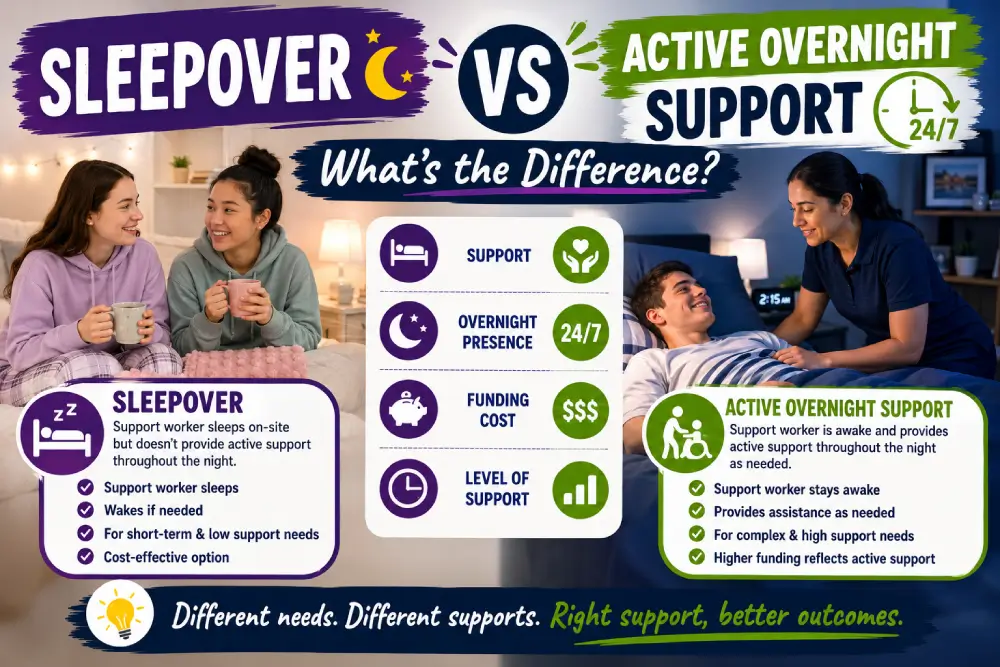
A sleepover shift means a support worker is on-site for the night, sleeping in a designated space, and available to assist if the participant needs help. The worker is generally expected to sleep through most of the night, with up to two short interventions allowed within the standard sleepover rate.
Sleepover suits participants who:
- Sleep through most nights without intervention
- May occasionally need help (toileting, repositioning) but not frequently
- Want the security of someone in the home overnight without active monitoring
Sleepover is funded at a lower rate than active overnight because the worker is not actively providing support throughout the night.
Active Overnight
An active overnight shift means the worker is awake throughout the night, actively monitoring or supporting the participant. This is funded at the standard hourly support rate because the worker is fully engaged for the whole shift.
Active overnight is funded for participants who:
- Need scheduled overnight care — repositioning every two hours, scheduled feeding, ventilator monitoring
- Cannot reliably sleep through and need frequent intervention
- Have safety risks that require continuous monitoring (severe sleep apnoea without CPAP, complex epilepsy, behaviour-related risks)
- Have HIDPA needs requiring continuous worker engagement
How The NDIA Decides
The NDIA looks at evidence of overnight support needs:
- Sleep diaries documenting frequency of overnight wakes
- Medical reports identifying conditions requiring overnight monitoring
- Allied health reports describing the support actually needed
- Provider notes documenting overnight care actually delivered in the current arrangement
Without strong evidence, the NDIA tends to fund the lower category. If your needs are genuinely active overnight, the case for funding has to be made clearly — clinical evidence is what gets it across the line.
What Happens If The Need Doesn’t Match The Funding?
Two common mismatches:
- Sleepover funded but active needed. The worker provides what the funding allows, which means scheduled overnight tasks may not happen. The participant ends up with less support than they need. Solution: request a plan variation or address at next plan review with new evidence.
- Active funded but sleepover sufficient. Less common, but where it occurs the funding may be reduced at next review. Honest reporting of actual need is in the participant’s interest, even if it means lower funding.
Hybrid Arrangements
Some participants need active care for part of the night and sleepover cover for the rest. For example, scheduled medication and repositioning every four hours from 10pm to 2am, then sleepover from 2am to 6am. These arrangements can be funded but need clear specification in the plan and the Service Agreement.
In SIL Homes
Most SIL homes are funded at Standard Needs with sleepover overnight. Higher Needs SIL includes active overnight, costing significantly more per night. The funding level is set per home based on the support needs of all participants, not individually.
Where one participant in a shared SIL home needs active overnight and the others do not, the home is sometimes staffed with a worker who can provide active care for the one participant while remaining alert for the others. The roster needs careful design.
FAQs
Q1. Can a sleepover worker be woken twice and still bill at sleepover rate?
Yes. The standard sleepover rate covers the worker being available and assisting up to twice during the night. More frequent intervention shifts the shift toward active overnight, which is billed differently.
Q2. Where does the worker sleep during a sleepover?
In a designated bedroom or sleeping space provided in the home. Reputable providers will not accept arrangements where the worker has no proper sleeping space — that is unsafe for the worker and the participant.
Q3. Can my partner provide overnight care instead of a paid worker?
If your partner is providing care and you both prefer that, the NDIS does not need to fund overnight workers. Where the partner cannot reliably provide care, NDIS-funded overnight support is the alternative.
Q4. Is active overnight the same as nursing care?
No. Active overnight support workers are not nurses, though some have HIDPA training. Where the participant’s needs require nursing, that is a separate funding category through Health Queensland or private health insurance.
Q5. How is active overnight different from a 24-hour roster?
Active overnight covers the night hours specifically. A 24-hour roster covers day and night with multiple workers across shifts. Most SIL homes operate on something between — daytime support plus overnight cover, with shift handovers.